
Self Care for Suckers — How Not to be a Jerk to yourself when your Brain won't come to the Party.

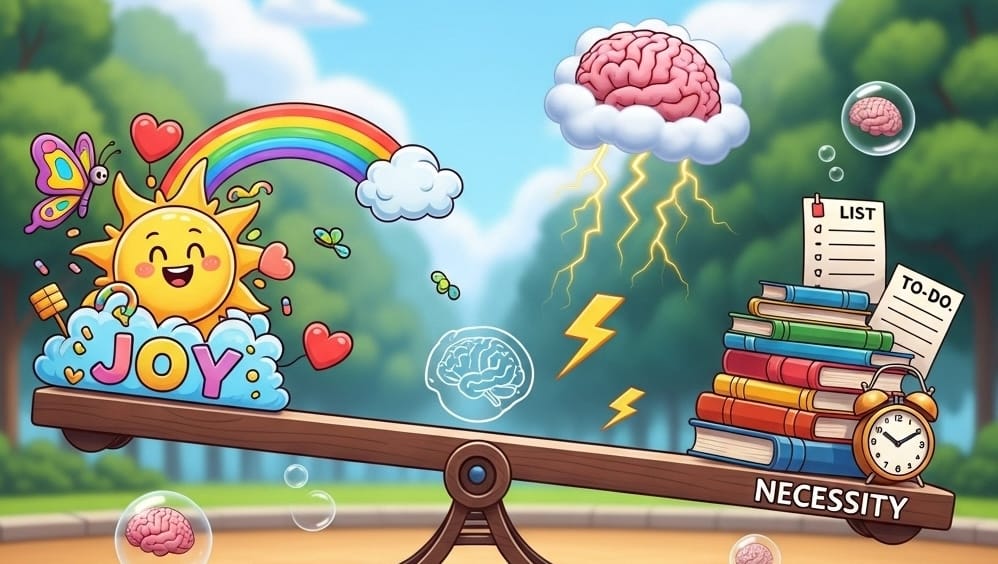
Every single day, we’re bombarded with stimuli competing for our attention: flashing lights, catchy jingles, news tickers, app notifications, overflowing inboxes, kids, pets, spouses—each volleying for our focus.
As we move through this world, we do our best to do our best. That looks different for everyone. For some, it’s hustling—chasing the next dollar, promotion, or big break. For others, it’s just surviving the day. Both are valid. (Yes, I know that’s a massive oversimplification.)
If my functioning sucks, how did I become an executive at it?
I recently listened to a podcast called Struggle Care by KC Davis. In episode one, they talk about executive functioning. I’ve never felt more seen in my entire life! Buckle up, friends—we’re about to nerd out and get technical for a minute, but I promise we’ll circle back to the non-technical weirdo you know and love soon enough.
KC and her guest, psychotherapist Dr. Lesley Cook, break down the differences between motivation and actual executive functioning issues. They liken it to the dashboard in Disney’s Inside Out, listing way more aspects than I ever imagined.
This fabulous party includes:
- Working Memory
- Cognitive Flexibility
- Inhibitory Control
- Planning and Prioritization
- Self-Regulation
- Attention and Focus
- Problem-Solving
- Organization
- Time Management
- Self-Monitoring
- Emotional Control
- Task Initiation
- Goal Setting and Achievement
- Flexibility
- Information Processing
- Stress Tolerance
They break these down in more detail during the episode—which I can’t recommend highly enough if you’re struggling with some (or all) of these things (no judgment!).
Quick disclaimer: I’m not a medical professional. Always consult yours about perceived or real struggles with executive functioning. That said, some things from the episode have truly changed how I see my past, present, and future—so I want to share them with you, in case they’re as revolutionary for you as they were for me.
A linguistic shift that blew my mind:
Neurodiverse folks, say it with me: “I hate routine, but I also need it.”
This has been the brick on my back for years, as I’ve tried to figure out system after system that might finally stick.
But KC flipped this on its head with one simple explanation: routines come with a built-in feeling of “I have to.” And what happens when we don’t get it done? Shame, negative self-talk, feeling generally yucky about ourselves. Cue the “Well, that didn’t work,” or “Just another failed plan!” or “Might as well not bother trying to keep up with this then, I guess.”
Here’s the magic sauce: what we need is not routine—it’s rhythm.
Rhythms allow us flexibility. We can build them into our days, weeks, and months without feeling beholden to them. If we plan to do certain things on certain days, maybe it becomes more like a habit than a chore after a while.
Of course, many of us have chronic pain or other things that get in the way—so, we can plan for that too. (I know. Ha. Haha. Hahahaha. Yeah, right.)
Minimum Viable Self-Care:
My sweetheart works in the AI space and often talks about the “Minimum Viable Product.” I love this as an adaptation for physical and mental health.
I’m planning to get myself a couple of pretty Canva templates and make some posters as loving reminders:
- What can happen when I have lots of energy
- What can happen when I have medium energy
- What can happen when I have little to no energy
I really think these visual cues will help me tremendously. Not only do they take the “freeze” out of task initiation paralysis, but they also prompt my brain when I’m running on empty—so I don’t forget the really important stuff, like feeding the cat. (Don’t worry—she lets me know.)
Hot tip (that I just came up with - so maybe it's lukewarm):
Make yourself a “Book of Me.”
Not in a “my favourite colour is” kind of way, but things like:
- Medication names and doses, and other medical info
- Emergency Contacts (handy if you're juggling multiple medical professionals like me)
- Ideal amount of sleep
- Foods that make you feel good/not good
- People I can call if....
(My sink blows up, my cat is projectile vomiting everywhere, I need to be talked out of buying an inflatable dinosaur suit, I need a no questions asked bail out from a first date.
I would argue that this is not only an utterly epic act of self care, it's also an exercise in getting to know ourselves, possibly a way to recognize patterns in a tangible way, and the real clincher to doing this is, if you or your loved ones are having a “struggle time,” there’s a guide to help you—or your professionals—out.
Level two: You can also do this with finances and other accounts that would need to be handled or managed by someone else in the event that this is necessary. I have a digital version that I have shared with my partner and my bestie. It's soooo helpful for my "worst case" anxiety!
Slowing Down and "Shaping" Up:
Last night I took a shower.
It’s one of the few places I actually allow myself to slow down.
The phrase “so, I’ve been thinking...” doesn’t feel as novel as it should these days.
I’m an often anxious chronic overthinker and over-explainer. I’m sure some of that has its roots in neurodivergence and disability—but I’m trying (desperately, and somewhat ironically) not to analyze things so much these days.
When things happen to us, it’s human nature to want to drill down to the “why.” More and more, I’m learning that sometimes there isn’t one, and even when there is, our human meat computers probably won’t come up with it.
A reality I’ve been running from for a long time: I need to slow down.
At the time of writing this, I’m working full and part-time jobs, doing some consulting gigs, and trying to schedule and coordinate care support, practitioner appointments (I would be non-functional without my aforementioned "pit crew"), and workplace accommodations.
That’s not even counting the things I do for fun or joy. (FUN! JOY! Imagine!)
I sing in a choir—something I’ve loved since I was little. The one I’m in now is queer-owned and operated. Our director is a sweet little firecracker with Broadway energy, and she’s also kind, warm, and down-to-earth. Singing in a choir full of queer people as an out, happy, queer person myself is something 7-year-old me—who took her first solo and stood at the front of the stage singing about the breezes and the flowers of spring—could never have imagined.
I write—at least semi-regularly with a small group of women once a week.
That’s the reason I finally got up the oomph to start this blog.
I have a loving partner who currently lives in the United States.
Good thing FaceTime isn’t pay-per-use.
I have a roommate I really enjoy spending time with.
We have a weekly ritual of hashbrowns on Saturday mornings. We watch a delightful smattering of programming: RuPaul’s Drag Race, Game Changers, and we’re on a rewatch of Joan of Arcadia. He’s smart, spiritual, and kind. I met him doing improv, which I started a few years ago post-COVID lockdowns, wanting to meet new folks and expand my comfort zone. He's changed my path for the better, and I'm grateful.
Lately, life feels like a teeter-totter of the necessary and the joyful. Too much of one, and the whole thing’s off-kilter. Not enough of the other? Maybe I’ll just hop on a plane and get the hell out of here.
I wish I knew why I suddenly feel so stretched, but I know I’m not alone.
The literal costs of living has everyone I know working multiple jobs and/or exhausted to the bone. While I'm no oracle, as I too am on this figurative treadmill—here’s a question to ponder:
Can you sense the shape of your joy?
Actual Self-Care (That’s Not Just Bubble Baths):
If you feel like the state of the world is—let’s be real—more than a little bit heavy, you’re not alone.
Here’s some unsolicited advice. I know, nobody needs that—but it comes with love and zero mansplaining, so I’d appreciate your consideration.
When everything feels big, overwhelming, un-sort-through-able—try this:
- Close your eyes and visualize the happiest version of yourself. It might be childhood you, you from two years ago, or even yesterday. Whatever shows up, hone in on a few things: What does that version of you feel like? What are the conditions that exist around them? Are those feelings or conditions replicable—even on a small scale?
- Consider what you enjoyed doing most as a child, if that’s a pleasant exercise. Is it possible to do some of that—even on a small scale? (Coloring is not just for kids, and neither are swing sets. Don’t grow up—it’s a trap.)
- Make a self-care tradition with yourself or a loved one. I know it might sound hokey, but honestly—it can be incredibly kind to your nervous system. We all know self-care isn’t just bubble baths and pedicures; it’s also balancing finances and making that appointment you’ve been putting off.
Here are some of mine (please adapt as needed):
- Pick one thing per week that’s on your to-do list and make a step towards working on it.
- Get a fancy shower product. (Fancy doesn’t have to mean expensive—just something that feels nice or smells like a spa—if that's your vibe).
- Make the shower a “no thoughts allowed” place—focus on being present. Let the water hit your aches and pains, breathe in and out.
- Try a rainbow meditation: picture all the colours washing down over you in the shower or in bed before sleeping.
- Listen to your body. Prioritize your body maintenance. Stretch. Move.
Go to the dang chiropractor—you’re sitting like a shrimp at your desk all day! - Therapy. Oh my god, go to therapy.
If you can’t afford therapy or don’t have coverage—at least don’t bottle it up. - If you’re partnered (or even if you’re not)—check in with a heart person and talk about your needs. What’s being met? What needs tending? Does that tending come from you, or someone else? Use the Five Love Languages as a basis, or establish your own check-in points.
- Remind yourself what your joy looks, sounds, tastes, smells, and feels like.
This is your love note, and your permission:
Doing your best is a moving goalpost.
Be gentle with yourself.
Your brain might not always come to the party, but you can still find your rhythm—and maybe even a little joy—along the way.
xoxo,
J.